
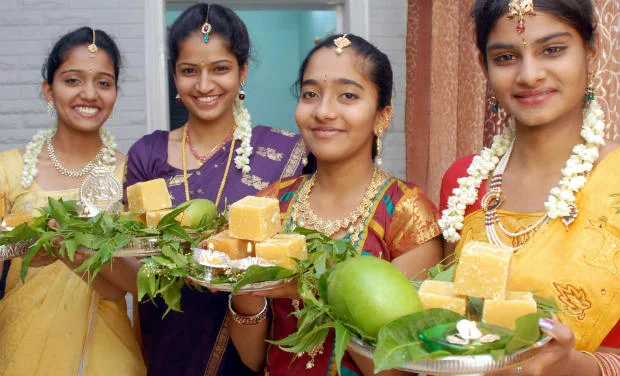
Ugadi, also known as the Telugu New Year, is one of the most significant and joyous festivals celebrated in East Godavari District and across Andhra Pradesh. The word Ugadi is derived from the Sanskrit words Yuga (age) and Adi (beginning), meaning “the beginning of a new era.” The festival marks the start of the Telugu calendar year, usually falling in March or April, symbolizing renewal, prosperity, and positivity.
On Ugadi morning, people in East Godavari begin their day with traditional oil baths and wear new clothes. Homes are cleaned, decorated with mango leaves (toranalu) and rangoli designs (muggulu) to welcome good fortune. A special dish called “Ugadi Pachadi” is prepared, made from six ingredients — jaggery, tamarind, neem, salt, chili, and raw mango — representing the six emotions of life: happiness, sadness, anger, fear, disgust, and surprise. This unique mixture teaches that life is a blend of different experiences.
Temples such as those in Kakinada, Rajahmundry, and Draksharamam witness special pujas and cultural performances on this day. Families gather to read the Panchanga Sravanam (New Year forecast) and seek blessings for health and prosperity in the coming year.
Ugadi in East Godavari is more than just a festival — it’s a celebration of new beginnings, cultural pride, and togetherness, beautifully reflecting the spirit of the Telugu people.